
Background
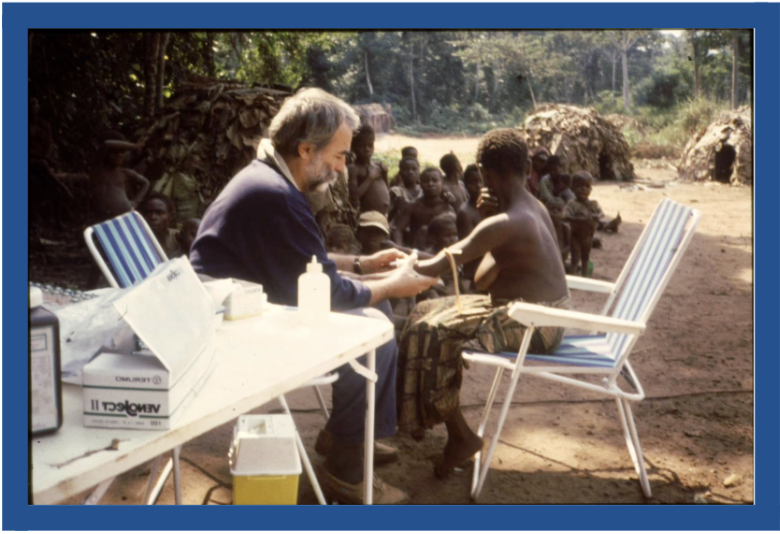
Dr. Gonzalez is a Professor at Georgetown University’s Medical Center, where his research focuses on emerging tropical diseases, virology, and the concept of One Health. He initially graduated and received his Master’s in Tropical Medicine and Hygiene from the Medical School of Bordeaux University, and received his PhD in Viral Ecology from the University of Clermont-Ferrand in France in conjunction with the American Centers for Disease Control and Prevention (CDC). Following his post-graduate studies, Dr. Gonzalez was recruited by the French Institute of Research for Development and studied developing countries across the Americas, Africa, and Asia. Later on, he worked as visiting professor at the Yale Arbovirus Research Unit. From 2008 to 2012, Dr. Gonzalez was the General Director of the International Center for Medical Research in Gabon (CIRMF), which has greatly contributed to long-term scientific development, training, and expertise within the Central African sphere. He has been involved in high security laboratory practices and research, such as early geographical information systems for analyzing the spread of infectious diseases and recognizing new pathogens for humans and animals.
Involvement in Research
Dr. Gonzalez has been involved in numerous research projects involving eco-epidemiology, biosecurity, and biosurveillance, and has also led vaccine clinical trials for viruses, tackled disease outbreaks, and promoted the adoption of a One Health model. By analyzing regional data, he has demonstrated the presence of viruses throughout the world, from strains in Africa to West Europe, and he explains that viruses are not limited to space and time. Their story is not simple, and he describes the necessity of One Health, which demonstrates how every facet of society and life can affect the extent of diseases, viruses, and the general health of all organisms. Ecology, for one, plays into outbreaks as a consequence of the environment’s or the organism’s microbiome (the soil, water, the nearby fauna and flora, climate). In Dr. Gonzalez’s own research unit in France covering emerging diseases, he employed a mathematician, a historian of the region, a medical ophthalmologist, and other technicians, and he was the team’s microbiologist. He stresses the benefit in surrounding himself with a variety of people who can all collaborate to interact and make change within the selected field of research.
Inspiration
While Dr. Gonzalez was studying medicine in France, he was required to do an internship, choosing to complete it in French Guinea in the Amazon. This experience exposed him to the field of tropical diseases, but, as he was still a student, Dr. Gonzalez likewise explored many avenues of medicine and stresses the importance of being flexible at the very beginning of a student’s journey into research and professional life. Later, he joined the Pasteur Institute as a researcher in parasitology. The plethora of diverse research and medical opportunities allowed for him to navigate possible fields within medicine to later narrow down and focus on.
Reflection
When conducting case studies, Dr. Gonzalez claims it is important to work with the people, to work in the country, and when possible, to direct multicultural teams in order to correctly interact with the local communities. Additionally, he emphasizes the necessity of medicine keeping up to date with technology, as technological advancements can be both a tool and a security risk for the medical field. In regards to discovery itself, Dr. Gonzalez suggests that when you are a scientist, it is essential to “be curious of everything” as there is always more to understand within the scientific field.
Advice for Students
Dr. Gonzalez recommends that students try to get involved in research as soon as they are able to participate, as it is important to continue learning even if there is not an end goal in sight or they have not reached a certain level in their career. Any experience can help a student, regardless of if it is their chosen field, since it will make them more competitive for later research labs and teams closer aligned with their interests. Dr. Gonzalez also comments that students should try to keep a wide imagination and to begin and continue to think outside of the box as soon as possible.